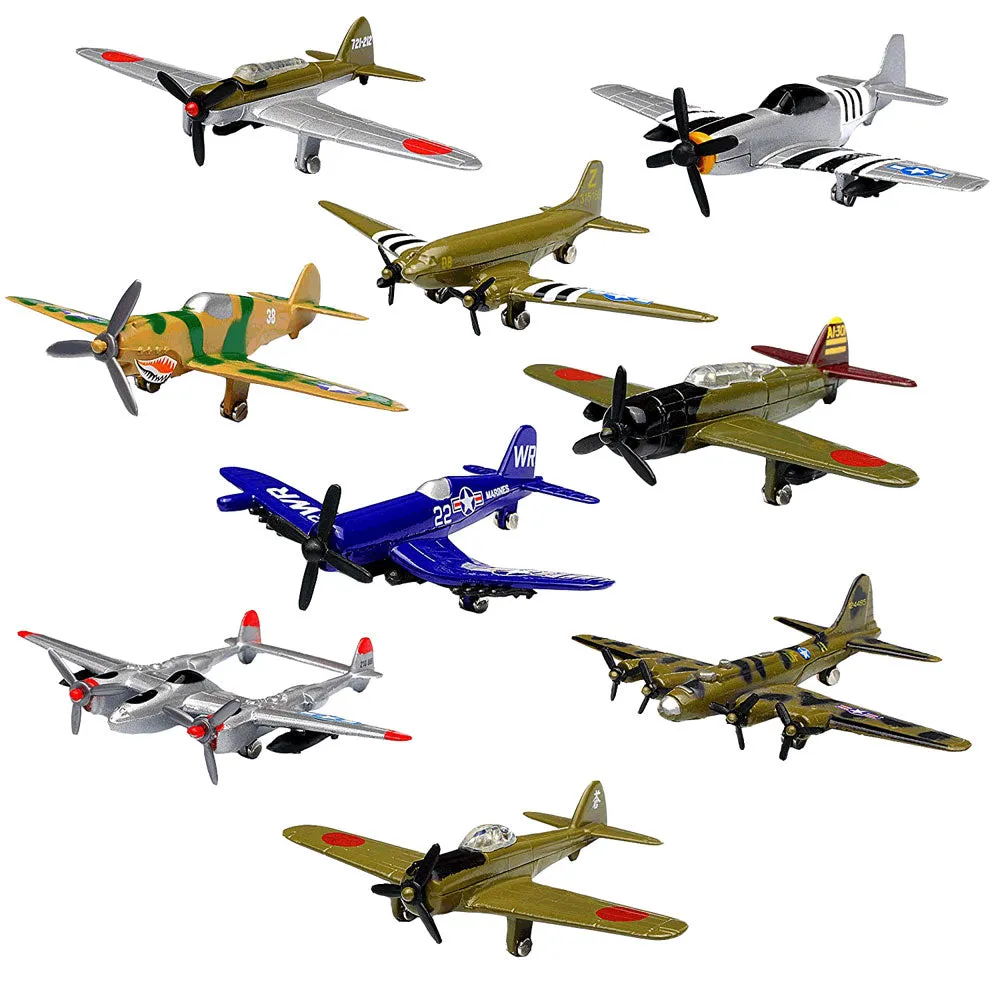
What are WW2 Diecast Planes
WW2 diecast planes are meticulously crafted miniature replicas of aircraft used during World War II. These models are typically made from diecast metal, which is a process where molten metal is injected into molds to create highly detailed and durable pieces. They capture the essence of iconic warplanes from the Allied and Axis forces, including fighters, bombers, and transport aircraft. Diecast planes are prized by collectors for their accuracy, historical significance, and the craftsmanship involved in their production. They offer a tangible connection to a pivotal period in history, allowing enthusiasts to appreciate the engineering and design of these legendary aircraft. These models come in various scales, such as 1 72, 1 48, and 1 32, allowing collectors to build comprehensive displays and dioramas. The level of detail can range from basic representations to highly intricate reproductions with realistic panel lines, weathering effects, and accurate markings. The market for these diecast planes is vibrant, with models ranging from affordable entry-level pieces to rare, limited-edition collectibles that can fetch significant prices.
Historical Significance
The appeal of WW2 diecast planes extends far beyond their aesthetic value. These models serve as miniature time capsules, preserving the legacy of the aircraft that played a crucial role in shaping the outcome of World War II. Each model represents a specific aircraft, often linked to particular missions, pilots, or units. This allows collectors to delve into the history of aviation, exploring the technological advancements, strategic importance, and human stories associated with these planes. Owning these diecast models enables history buffs and aviation enthusiasts to connect with the past, fostering a deeper appreciation for the sacrifices, innovations, and global impact of the conflict. The meticulous detail on the models, from the accurate paint schemes to the insignias and markings, mirrors the historical accuracy that collectors cherish. Furthermore, the act of collecting can lead to extensive research, further enriching their knowledge of this important era. The models themselves become conversation starters, educational tools, and cherished pieces of history that can be passed down through generations.
Collecting Diecast Planes

Collecting WW2 diecast planes is a fulfilling hobby that blends historical interest, appreciation for craftsmanship, and the thrill of the hunt. The process involves identifying specific models, understanding their historical context, and building a collection that reflects personal preferences. Collectors often focus on particular aircraft types, nations, or historical events. The choices are vast, from iconic fighters like the Spitfire and Mustang to strategic bombers like the B-17 and Lancaster. Building a collection can range from the casual gathering of a few favorite models to a dedicated pursuit of rare and limited-edition pieces. Collectors may join online communities, attend model shows, and connect with other enthusiasts. The search for rare models can be an exciting aspect of the hobby. The care and preservation of these models is also part of the collecting experience, which enhances their longevity and value. Collectors must also develop an understanding of the market to make informed decisions. The community aspect is important because collectors share their expertise, exchange information, and build friendships centered around their shared passion.
Top 5 Facts about WW2 Diecast Planes
Fact 1 The Scale
Diecast planes come in different scales, with the most common being 1 72, 1 48, and 1 32. The scale represents the ratio between the model’s size and the actual aircraft. For instance, a 1 72 scale model is 1 72nd the size of the real plane. This allows collectors to create visually appealing displays with models of various aircraft, as they will be proportional to each other. Choosing a scale often depends on available display space, personal preference, and the availability of models in that scale. The 1 72 scale is popular because it offers a good balance between detail and size. 1 48 scale models are larger and often feature more intricate details. The largest scales, such as 1 32, provide the most detail but require more space. Collectors may choose to specialize in a specific scale or collect across different scales depending on their interests and the availability of specific models.
Fact 2 The Materials

Diecast planes are primarily made from diecast metal, usually zinc alloy, which provides durability and the ability to capture fine details. This manufacturing process involves injecting molten metal into molds under high pressure, which allows for intricate shapes and designs. The metal body is usually painted with accurate camouflage and markings. Some models may include plastic or resin components for finer details like antennas, propellers, and other delicate parts. The use of diecast metal gives the models weight and a solid feel. The metal is also durable, reducing the risk of damage. High-quality models use premium materials and often feature additional detailing, such as realistic weathering effects, panel lines, and accurate cockpit interiors. The choice of materials contributes to the model’s overall quality, appearance, and value. Proper storage and care can help maintain the appearance and integrity of these models over time.
Fact 3 The Details
One of the key appeals of diecast planes is the level of detail. Manufacturers strive to replicate every aspect of the original aircraft, from the overall shape and dimensions to the smallest features. This includes accurate panel lines, rivets, and access panels. The paint schemes and markings are meticulously applied, with each model reflecting the specific camouflage patterns, insignias, and unit markings of the real aircraft. Many models include detailed cockpits with instrument panels, seats, and pilot figures. Some high-end models feature movable parts, such as control surfaces, landing gear, and even opening canopies. These intricate details enhance the realism of the models and make them appealing to collectors. Research into the historical accuracy of each model is very important to ensure the model reflects its real-life counterpart. The goal is to make each model a perfect miniature representation of the full-size aircraft, capturing the essence of the original design and historical context.
Fact 4 The Value
The value of WW2 diecast planes varies significantly depending on several factors. Rarity is an important element, with limited-edition models, those produced in small quantities, and those with unique markings commanding higher prices. Historical significance also influences value; models representing iconic aircraft or those associated with famous pilots or events are highly sought after. The manufacturer, condition, and level of detail are also important. Models from well-known brands with high levels of detail are generally more valuable. The model’s condition is also very important; a model in mint condition will be more valuable than one that has been damaged. The market for diecast planes is dynamic, with prices fluctuating based on demand, availability, and the overall economic climate. Collectors should research the market to understand the current value of specific models before buying or selling. This will involve checking prices, and attending model shows, to determine the prices models typically sell for.
Fact 5 The Rarity

Rarity is a significant factor in the world of WW2 diecast planes. Limited-edition models are often produced to commemorate specific events or to target a particular segment of collectors. The limited production run makes these models highly sought after and increases their value over time. Models with unique markings, such as those representing a specific squadron or pilot, are also rare and desirable. Some models are only available through certain retailers or at specific events, further enhancing their rarity. The rarity of a model is often tied to its historical significance or the appeal of the aircraft it represents. The hunt for rare models is an integral part of the collecting hobby. Collectors often spend years seeking a specific model to complete their collections. Collectors need to stay informed about new releases and the secondary market to find rare models. This can lead to the thrill of the hunt and the satisfaction of acquiring a highly prized piece. This is what makes them appealing to collectors.
Where to Buy WW2 Diecast Planes
Online Marketplaces
Online marketplaces such as eBay, Amazon, and specialty online stores offer a wide selection of WW2 diecast planes. These platforms provide access to a vast network of sellers and a diverse inventory. Prices can vary significantly, so it’s crucial to compare offers and research the seller’s reputation before making a purchase. Auction sites are another area to find rare pieces. The convenience of shopping from home and the ability to compare prices make online marketplaces a popular choice for collectors. Collectors should pay attention to shipping costs, return policies, and the seller’s ratings before completing a purchase. The ability to filter search results by scale, manufacturer, and aircraft type makes it easier to find specific models. Many online marketplaces provide detailed product descriptions and multiple photos. This allows you to inspect the model’s condition and features. Furthermore, online marketplaces allow you to access a large global market. This can result in finding rare or hard-to-find models from various parts of the world.
Specialty Shops

Specialty hobby shops and model stores offer a more curated selection of WW2 diecast planes, often with expert advice and a focus on quality. These shops provide a hands-on shopping experience, allowing collectors to inspect the models in person before buying. The staff can offer valuable insights into the models, their history, and the current market. Specialty shops may also carry limited-edition pieces or models that are not readily available online. The staff are often knowledgeable collectors themselves. The shop owners are often members of the collecting community. Specialty shops provide a more personal touch and can foster a sense of community among collectors. Many shops hold events, such as model shows or club meetings. This creates a sense of community among the collectors. Supporting specialty shops contributes to the preservation of the hobby and provides a valuable resource for enthusiasts.
Auctions
Auctions, both online and in-person, are another avenue for acquiring WW2 diecast planes. Auctions can be a good place to find rare or vintage models, and sometimes you can find a good deal. However, bidding can be competitive, and it is important to set a budget. Always research the models before bidding, checking their current value and condition. Auction houses often provide detailed descriptions and photos of the models, but it is crucial to ask any questions before placing a bid. Auction sites such as eBay also have a vast selection. There are risks such as hidden damage or inaccurate descriptions. It’s essential to review seller feedback and understand the terms and conditions of the auction. Successful bidding requires patience, research, and discipline. Some auctions may also have a buyer’s premium, which is an additional fee added to the winning bid. Understanding the auction process and doing your homework can increase the chances of acquiring desired models at a reasonable price.
Caring for Your Diecast Planes
Cleaning and Dusting

Regular cleaning and dusting are essential for preserving the appearance and condition of your diecast planes. Dust can accumulate on the models. Use a soft-bristled brush or a microfiber cloth to gently remove dust. Avoid using harsh chemicals or abrasive cleaners, which can damage the paint and details. For stubborn dirt, a slightly damp cloth can be used, but be sure to dry the model thoroughly. Some collectors use compressed air to remove dust from hard-to-reach areas. Always be careful when handling the models, and avoid applying excessive pressure. Regular cleaning prevents the build-up of dust and debris, and preserves the model’s finish. Cleaning them helps maintain their value. Always check the cleaning instructions provided by the manufacturer, if available, to ensure you’re using the proper methods. This gentle care helps ensure the models remain attractive and well-preserved for many years.
Storage Tips
Proper storage is crucial for protecting your diecast planes from damage. Store models in a cool, dry place away from direct sunlight and extreme temperatures. Direct sunlight can fade the paint. Extreme temperatures can cause the metal to warp or expand. Display cases or protective boxes are ideal for protecting the models from dust and accidental damage. When storing models, avoid stacking them on top of each other, which can cause scratches or paint damage. Ensure the models are securely positioned and will not be bumped or knocked over. Consider using acid-free tissue paper or foam inserts to cushion the models and prevent friction. If possible, store your models in a climate-controlled environment to further reduce the risk of damage. Regularly inspect your storage space for signs of moisture, pests, or other potential threats. These simple precautions will help keep your diecast planes in great condition for the long haul.
Displaying Your Collection
Displaying your WW2 diecast planes is an important part of the collecting experience. It allows you to showcase your collection and appreciate the beauty and historical significance of the models. There are many display options, from simple shelves to custom-built display cases. Consider the size and style of your collection when choosing a display method. Display cases with glass doors provide protection from dust and accidental damage. Shelves can be used to arrange the models, organizing them by aircraft type, nation, or historical event. Lighting can enhance the display and highlight the details of the models. Consider using spotlights or LED strip lights. The presentation enhances the visual appeal. You can create dioramas, adding miniature figures, vehicles, and scenery to create a more immersive display. Regular rotation can keep the display fresh. The display also helps you enjoy your collection and share your passion with others.
Conclusion

WW2 diecast planes offer a unique way to connect with history, appreciate fine craftsmanship, and experience the thrill of collecting. This hobby is more than just acquiring miniature models; it is an exploration of aviation history. The detailed models, historical context, and the hunt for rare pieces make this a rewarding hobby. Whether you are a seasoned collector or just starting, there is always something new to learn and enjoy. So, start exploring the world of WW2 diecast planes today. This will give you a deeper understanding of the aircraft that shaped the world. You can discover the appeal of these detailed models. The journey into collecting is full of fascinating stories. The models serve as tangible links to the past. Start your collection, connect with the community, and preserve a piece of history.