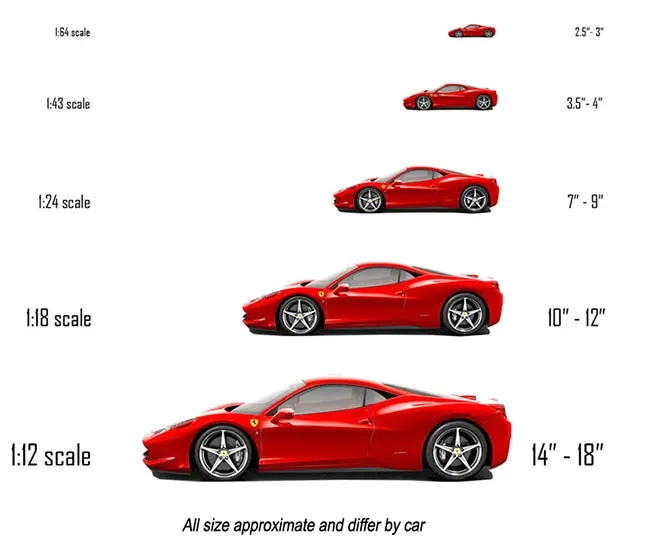
What is a Diecast Size Chart?
A diecast size chart is an essential tool for any collector or enthusiast of model cars. It provides a comprehensive guide to the various scales in which these miniature vehicles are produced, allowing you to understand the precise dimensions of a model relative to its real-life counterpart. This chart is crucial for making informed decisions about which models to purchase, how to display them, and how they fit into your existing collection. Knowing the scale ensures that the models you buy are the size you expect, preventing disappointment and ensuring compatibility with your display setup. These charts are particularly helpful for beginners as they navigate the complex world of diecast model scales.
Understanding Scale in Diecast Models
The scale of a diecast model is expressed as a ratio, indicating the relationship between the model’s size and the size of the actual vehicle. For instance, a 1:18 scale model means that the model is 1/18th the size of the real car. This ratio is fundamental to understanding the dimensions of a model. The most common scales, such as 1:18, 1:24, and 1:43, each offer a unique balance of detail, size, and cost. The scale influences not only the overall dimensions but also the level of detail achievable in the model. Smaller scales often require more intricate manufacturing processes, while larger scales allow for more detailed features and easier handling.
Common Diecast Scales Explained

Several scales dominate the diecast model market. Each scale offers a different aesthetic and practical consideration for collectors. The three most common scales are detailed below:
1:18 Scale Details
1:18 scale models are among the most popular, prized for their size and detail. These models are generally larger, providing ample space for intricate features and opening parts such as doors, hoods, and trunks. This scale is perfect for showcasing models with high detail. The larger size also makes these models more robust and easier to handle. Collectors often choose 1:18 scale for their flagship models, as the size allows for a stunning visual impact and enhances the collectibility of the piece.
1:24 Scale Details
1:24 scale models offer a balance between size and affordability. They are smaller than 1:18 models, making them more manageable for display and storage. This scale still allows for a good level of detail, with opening parts and intricate interior designs. 1:24 scale is often seen as an excellent starting point for new collectors, providing a great mix of quality and value. The availability of models in this scale is also broad, covering many car types and brands, allowing for diverse collections.
1:43 Scale Details

1:43 scale models are smaller and more compact, ideal for collectors with limited space. These models are typically more affordable, allowing collectors to build larger and more diverse collections. While the smaller size may limit some detail compared to larger scales, manufacturers still produce impressive models. This scale is perfect for those who appreciate variety and want to showcase a wide array of vehicles in a single display. The smaller footprint also makes them easy to transport and store, making them convenient for on-the-go collectors.
Why Size Matters for Collectors
The size of a diecast model significantly impacts the collecting experience. Size dictates the model’s visual impact, level of detail, and how it fits into your display. Larger scales allow for more intricate features and greater visual presence, making them excellent for display pieces. Smaller scales are better for building large, varied collections without requiring excessive space. Understanding the scale helps in planning the storage of models and how they will be displayed. Choosing the right scale also allows collectors to focus on specific brands or car types, further refining their collection.
Display and Storage Considerations
Displaying and storing diecast models involves considering their size to maximize aesthetic appeal and protect the models. Larger-scale models need more space, which should be considered when planning your display. Consider using display cases to protect models from dust and damage, especially for more valuable items. Shelving units, glass cabinets, and wall-mounted displays are all suitable options, depending on your collection’s size and style. Storage is just as important to prevent damage. Models should be stored in a cool, dry place away from direct sunlight to prevent fading and degradation. Proper packaging, such as the original boxes, can also help protect models during long-term storage.
Compatibility of Scales and Collections

Collecting across different scales can add visual interest to your collection, but it requires careful planning. Understanding the scale of each model is crucial to achieve a balanced display. Mixing scales can add depth and visual interest to your collection, providing a dynamic aesthetic. Ensure that the scales complement each other rather than clash. Consider groupings of models based on scale, type, or brand. Using a diecast size chart helps make these decisions. Some collectors prefer to focus on a single scale to ensure a cohesive look, while others enjoy the variety that mixing scales offers.
How to Read a Diecast Size Chart
Reading a diecast size chart involves understanding the ratio and how it translates into real-world measurements. The chart will list the various scales and the corresponding dimensions of a model based on its real-world size. Locate the model’s scale and refer to the chart for accurate measurements, often in inches or centimeters. Use online resources to find charts that translate these ratios into physical measurements. Using these measurements, compare your models and other items to determine how they will look together. Understanding the scale will allow you to accurately measure the dimensions of each model in the collection.
Finding the Right Size for Your Needs
Choosing the right scale depends on several factors, including available display space, budget, and personal preferences. Consider the size of your home or display area and how much space you can dedicate to your collection. Your budget will play a role as larger-scale models often cost more. Research different scales and compare models of the same car in different sizes to assess the level of detail and features available. Assess your collecting goals. If you want to build a vast collection of different models, smaller scales may be more practical. If you are interested in the highest levels of detail and have space, larger scales are ideal. Consider what scales are available for the types of models you are interested in.
Where to Find Diecast Size Charts

Diecast size charts are available through various online resources. Many online retailers that sell diecast models provide size charts on their product pages, allowing you to compare model sizes before purchasing. Specialty websites dedicated to model car collecting offer detailed charts and guides. Forums and community discussions often feature resources. Checking the manufacturer’s websites is also a good practice for more accurate information. Be sure to verify the source to ensure that it is up to date and accurate. Using a diecast size chart ensures informed decisions about your diecast model collection.
Conclusion
Understanding the diecast size chart is key to successful diecast collecting. Knowing the different scales, their associated dimensions, and how to read the chart are essential to make informed decisions. By understanding the scale, you can choose the right models, plan your displays, and build a fulfilling collection. Whether you’re a beginner or a seasoned collector, utilizing a diecast size chart will enhance your collecting experience.